
Rule34 Explained: Stream Online in Full HD for Free
Rule34 is one of those internet phrases people can encounter long before anyone explains what it actually means. At its core, Rule 34 is an old internet meme claiming that if something exists, adult-themed content about it probably exists somewhere online. It is not a real technical standard, an organization, or a single website.
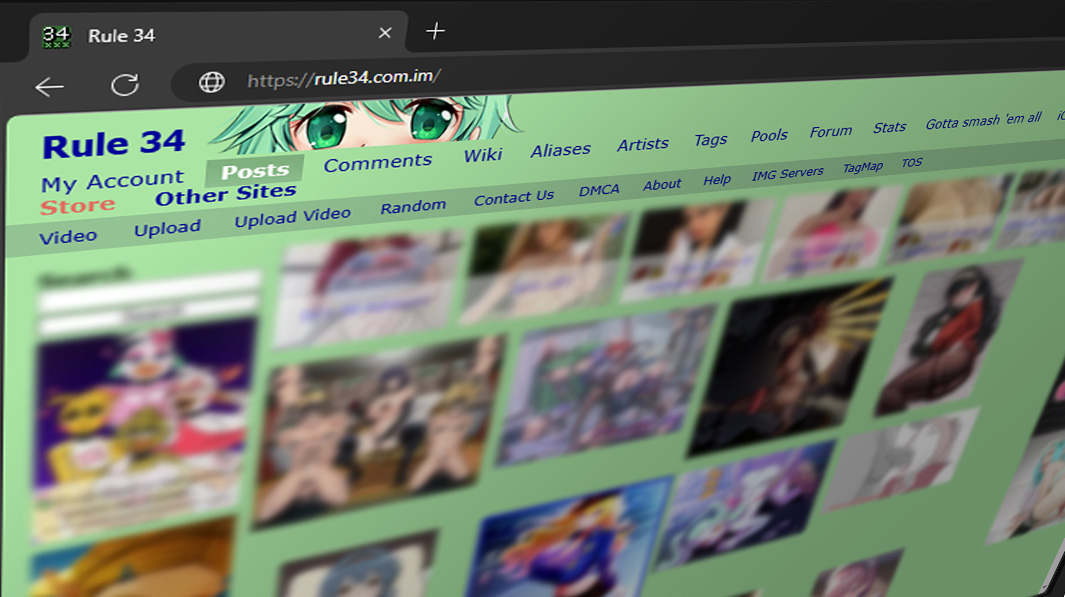
That distinction matters because searches for Rule34 now mix several different ideas together. The phrase can refer to an internet meme, adult fan art, booru-style imageboards, websites using the phrase as a brand, anime communities, social-media jokes, and questions about browsing safety.
Once those pieces are separated, the topic becomes much easier to understand.
What Is Rule34?
Rule34, commonly written as Rule 34, belongs to a collection of tongue-in-cheek sayings known as the Rules of the Internet. The best-known interpretation suggests that almost any imaginable subject can eventually inspire adult-themed fan-created content.
The phrase became part observation, part joke, and part commentary on how quickly online communities remix popular culture. It is not a genuine rule governing the internet, and there is no central organization that defines what qualifies as Rule34.
In modern usage, the phrase can describe the original meme, adult-oriented fan art, tagged image archives, websites adopting the Rule34 name, or casual references appearing across forums and social platforms.
Illustrative expert perspective — Dr. Maya Ellison, fictional digital-culture researcher: “Rule 34 makes more sense when you treat it as internet folklore rather than a destination. Websites adopted the phrase because people already understood the cultural reference.”
Where Did Rule34 Come From?
The history of Rule34 is less tidy than many short explanations suggest. A widely cited milestone is a webcomic from 2003 associated with Peter Morley-Souter, also known online as TangoStari. That comic is commonly credited with helping popularize the recognizable Rule 34 wording.
Similar ideas and expressions appear to have circulated in internet communities before that point, which makes it difficult to identify one unquestionable moment of creation. The 2003 reference is best understood as an important milestone rather than proof that nobody expressed the idea earlier.
As internet forums, anonymous message boards, meme communities, and fan-art spaces grew, the phrase spread rapidly. It eventually became part of broader collections of humorous Rules of the Internet and gained a life of its own.
When Was Rule34 Created?
If someone asks for a simple date, 2003 is the year most commonly associated with the recognizable form of Rule34. The phrase became increasingly visible during the years that followed as online communities repeated, modified, and republished it.
Internet culture rarely develops through one clean starting point. A phrase can circulate informally for years before one version becomes memorable enough to be preserved.
What Is the Connection Between Rule 34 and 4chan?
Rule34 is strongly associated with 4chan, but the relationship is better described as amplification rather than simple invention.
The phrase circulated through the same early online culture that surrounded anonymous imageboards and message boards. Communities connected with 4chan repeatedly shared and adapted lists of the Rules of the Internet, helping Rule 34 become more recognizable.
That is why many people assume Rule34 originated entirely on 4chan. In reality, its development is connected with a broader network of early web communities, forums, meme culture, imageboards, and fan-created archives.
Is Rule34 a Website or an Internet Rule?
This is one of the most common points of confusion. Rule34 originally refers to an internet saying. Websites later adopted the phrase in their domain names, branding, categories, and community identities.
This means a person saying “I saw it on Rule34” might be referring to a particular website, while someone saying a character became associated with Rule34 is usually referring to the broader meme.
There is therefore no universal Rule34 official site representing the original internet expression. Different websites may use the same phrase while operating independently from one another.
Rule34 vs. Booru: What's the Difference?
The terms Rule34 and booru frequently appear together, but they describe different concepts.
A booru is a type of image repository that organizes images through searchable metadata and tags. Danbooru became one of the most influential examples of this structure, and its organizational approach inspired numerous specialized image archives.
| Topic | Rule34 | Booru |
|---|---|---|
| Basic meaning | Internet meme or adult fan-art concept | Tag-based image archive format |
| Main identity | Cultural idea | Content organization system |
| Primary function | Describes a type of internet phenomenon | Helps users search and classify images |
| Tags | May appear on related websites | Usually central to navigation |
| Adult content | Usually associated with adult material | Not necessarily adult-oriented |
| Single official website | No | No |
A website can therefore be both Rule34-oriented and booru-style. One term describes the cultural subject matter, while the other describes how images are organized and searched.
Why Are Tags So Important on Booru Sites?
Traditional social networks usually revolve around accounts, feeds, recommendations, and engagement. A booru works more like a searchable visual database.
Images can be classified using information about characters, franchises, artists, visual characteristics, media formats, content ratings, and many other attributes. The strength of this approach comes from combining several tags to narrow a large collection into a much more specific result.
This tag-centered structure is one reason booru systems became popular among anime, manga, illustration, and fan-art communities.
Why Is Rule34 So Closely Associated With Anime and Manga?
Rule34 applies to far more than anime, but anime and manga became especially visible within searches related to the phrase because of the overlap between fan-art culture and booru-style imageboards.
Anime communities were early adopters of large image archives organized with detailed tags. As those archives expanded, fan-created interpretations of popular characters became easier to find, categorize, and share.
This created a strong cultural connection between Rule34, anime fandom, imageboards, and manga-related artwork. The association became so strong that some users encountering the term today mistakenly assume it originated specifically inside anime culture.
In reality, Rule34 is a broader internet meme that later became especially visible within certain fandom ecosystems.
What Does Rule34 Mean on Social Media?
On platforms such as X, Reddit, forums, and online communities, Rule34 is often used as shorthand for the idea that adult fan-created material probably exists for a recognizable character, game, film, mascot, fictional universe, or internet meme.
Sometimes people use the phrase literally. In many conversations, however, it functions as an inside joke about the speed and unpredictability of internet fandom.
This explains why Rule34 can suddenly appear in discussions that have nothing to do with a specific Rule34 website. The phrase has become part of general internet vocabulary.
Is Rule34 Safe?
The answer depends on what someone means by Rule34.
The concept itself is simply an internet expression. A website using the term is a different matter. Its safety depends on the specific domain, advertising systems, scripts, downloads, account practices, and technical security of that particular service.
Adult-oriented websites are not automatically infected with malware, but unfamiliar domains should never be assumed to be trustworthy simply because their name is recognizable.
Rule34 Browser Safety
A modern, updated browser provides important protection against suspicious pages, harmful downloads, phishing attempts, and deceptive redirects. Those protections are most effective when users do not disable them.
Unexpected requests to install software deserve particular caution. A website should not need a mysterious video player, unusual browser extension, codec package, security patch, or executable program merely to display ordinary web content.
The domain name also matters. Copycat websites can imitate the appearance or branding of popular services while using a slightly different address. Checking the actual domain before entering account information can prevent many common problems.
Illustrative expert perspective — Jordan Blake, fictional cybersecurity analyst: “The name printed on a website tells you very little about its security. Browser warnings, download behavior, domain identity, permissions, and account practices are much more useful signals.”
Does Rule34 Have Viruses?
It is not accurate to say that Rule34 itself contains viruses because Rule34 is not a single program or platform.
A particular website may contain aggressive advertising, harmful redirects, deceptive notifications, or unsafe downloads. Another website using similar terminology may behave completely differently.
A page becomes especially suspicious when it claims that the device is already infected, insists that browser protection must be disabled, launches repeated unrelated tabs, demands unnecessary permissions, or forces a software download.
Browser security warnings should be taken seriously rather than treated as obstacles that need to be bypassed.
Is Rule34 Safe on Mobile?
The same general security principles apply to smartphones. Modern mobile browsers include sandboxing and protections against many common web threats, but phishing, misleading advertisements, and suspicious downloads can still appear.
Mobile users should be especially cautious when a website encourages installation of an unofficial app package. A random Rule34 APK found through an advertisement or download mirror should not automatically be treated as trustworthy.
For ordinary browsing, an updated mainstream browser usually provides a more predictable security environment than installing unknown third-party applications.
What Is the Rule34 App?
There is no universal official Rule34 application connected to the original internet meme.
Different developers may create booru clients, browsing tools, wrappers, mobile interfaces, or unrelated applications using similar terminology. This makes the phrase “Rule34 app” very different from the name of a service controlled by one clearly identifiable company.
Before installing any application associated with the term, it is worth checking who created it, where it is distributed, what permissions it requests, and whether its behavior matches its stated purpose.
An application asking for unusually broad access to files, device administration, accessibility controls, contacts, or unrelated services deserves additional scrutiny.
Does Rule34 Require Registration?
Rule34 itself requires no account because it is an internet concept rather than a service.
Individual Rule34 or booru-style websites establish their own account systems. Some may allow visitors to browse without registration while reserving functions such as favorites, commenting, uploads, customization, or advanced tools for registered users.
Because websites can change their policies, the current rules of the specific service are more useful than assumptions based on the Rule34 name.
Is Rule34 Free?
There is no single pricing model attached to Rule34.
The meme itself costs nothing to reference or understand. Websites using the term may operate through advertising, community support, optional accounts, subscriptions, or other models.
This distinction matters whenever someone searches for “Rule34 free” because the phrase mixes a cultural concept with independently operated websites.
Does Rule34 Have Age Restrictions?
Content commonly associated with Rule34 is intended for adults. Individual platforms can use age gates, account restrictions, content filters, or other access controls depending on their policies and region.
The important distinction is that the original internet meme has no central authority setting one universal age policy. Restrictions come from the particular service and the rules applying in the user's region.
Illustrative expert perspective — Prof. Ethan Mercer, fictional internet-policy educator: “Internet memes spread globally, but platforms operate under different regional expectations. Users should separate the cultural meaning of a meme from the policies of the service displaying the content.”
What Are Safer Rule34 Alternatives?
People searching for Rule34 alternatives are not always looking for adult material. Sometimes they simply want fan art, character illustrations, anime artwork, or community-created images without explicit results.
In that situation, a general fan-art community, moderated art gallery, SFW booru, artist portfolio platform, or fandom-focused image archive can be a better match.
Content filters are particularly useful because they allow users to search by character, franchise, artist, or visual style while excluding unwanted categories.
Which Alternatives Have Better Tag Systems?
Booru-style repositories tend to offer stronger tag systems than ordinary social platforms because metadata is central to the entire browsing experience.
A sophisticated tag system can connect characters with franchises, associate artists with their work, identify different media formats, handle alternate names, distinguish content ratings, and combine several attributes within one search.
This is one reason the booru model has remained useful even as social media became the dominant way people discover visual content.
Why Is It Called Rule 34?
The number comes from the broader joke of presenting observations about internet behavior as though they were numbered rules.
Instead of simply saying that online communities create adult interpretations of almost anything, early internet culture transformed the observation into something that sounded strangely official: Rule 34.
That compact format made it memorable. People could mention two words and a number while assuming other internet users understood the reference.
Many other so-called Rules of the Internet appeared over time, but Rule34 became one of the few that remained widely recognizable long after the culture that first popularized those lists had changed.
What Happened to Rule34?
Rule34 never really disappeared. The internet around it changed.
Early meme culture was concentrated in forums, imageboards, standalone websites, and anonymous communities. Modern internet culture is distributed across social networks, search engines, private communities, creator platforms, messaging apps, and algorithm-driven feeds.
Rule34 moved along with those changes. Today it may appear as a meme reference, a search phrase, a tag, an imageboard category, a website name, or a joke in a social-media conversation.
The expression survived because it is flexible enough to retain its meaning even as the platforms carrying it keep changing.
Why Rule34 Still Matters in Internet Culture
Rule34 is more than a joke about adult fan-created content. It also illustrates how online communities transform popular culture.
Characters, franchises, games, movies, memes, celebrities, mascots, and fictional universes are constantly reinterpreted by internet users. Once something becomes recognizable enough, communities begin producing variations, parodies, fan art, discussions, and increasingly specialized forms of remix culture.
Rule34 also demonstrates how internet folklore can spread without central ownership. A phrase can move from one community to another, change meaning slightly, and eventually become familiar to people who know nothing about its original context.
Platform design matters as well. Forums encouraged threaded discussion, anonymous imageboards encouraged rapid reposting, boorus encouraged tagging, and modern social networks encourage algorithmic discovery. Each environment changes how the same cultural idea spreads.
This also explains why someone encountering Rule34 today might assume it is merely the name of a website even though the meme is older than many sites now using the term.
Conclusion
Rule34 began as part of early internet folklore and grew into one of the web's most recognizable memes. Although the phrase is frequently associated with adult fan-art websites and booru-style imageboards, Rule34 itself is not one official website, application, company, or platform.
Its history runs through early web humor, anonymous communities, imageboards, fandom culture, anime communities, tag-based archives, and modern social media.
Understanding that distinction makes searches about Rule34 much less confusing. The phrase describes a cultural idea, while the websites, apps, imageboards, and communities using the name are separate services with their own features, security practices, account systems, and content policies.
FAQ About Rule34
What is Rule34?
Rule34 is an internet meme suggesting that adult fan-created content can eventually appear for almost any recognizable subject. It became widely known through early internet communities and later became strongly associated with fan art and imageboards.
Where did Rule34 come from?
A 2003 webcomic is commonly associated with the version of Rule34 that became widely recognizable. Similar ideas appear to have circulated earlier, and the phrase later spread through forums, imageboards, and collections of humorous internet rules.
Is there an official Rule34 website?
No. The original Rule34 meme is not owned by one website. Several independent sites use the phrase in their branding, but none serves as a universal official home for the internet expression itself.
Is Rule34 safe?
The phrase itself is simply an internet meme. The safety of a particular website depends on its domain, technical security, advertising, downloads, scripts, permissions, and account practices. Browser warnings and unexpected download requests deserve caution.
Does Rule34 require an account?
Rule34 as a concept requires nothing. Individual websites using the term may allow browsing without registration while reserving certain functions for registered users.
Is Rule34 mobile friendly?
That depends on the individual website. Many modern imageboards work in mobile browsers, but there is no single universal Rule34 mobile platform or official application.
What is the difference between Rule34 and a booru?
Rule34 describes an internet meme and a category of adult-oriented fan-created content. A booru is a tag-based image archive structure. A site can use both concepts at the same time, but they refer to different things.